How to promote the development of orientation skills using VisionART, an innovative tool for processing experiences acquired during visits to companies or institutions focused on sustainability issues.
Institution: Liceo Chierici – Italy
It is a tool for orientation. It is a digital logbook designed for upper secondary school students, with the aim of supporting the development of orientation skills through the re-elaboration of experiences of visits to companies or institutions carried out from an orientation perspective on the themes of sustainability.
It was developed in collaboration with the University of Bologna, Faculty of Educational Sciences, Department of Organizational Psychology coordinated by Professor Dina Guglielmi.
Thanks to guided questions, users are accompanied on a journey of better self-knowledge and the skills they wish to strengthen, learning to relate what has been learned in class with possible applications in the world of . work.
In this way, VisionArt is configured as a concrete support in moments of choice, offering everyone a space for reflection, awareness and projection. For new generations, who have grown up in a digital context, tools like this represent a privileged channel to access orientation activities, making the experience more engaging, motivating and close to their languages.
“Orientation is a process aimed at facilitating self-knowledge, the formative, professional, social, cultural and economic context of reference, the strategies implemented to interact in these realities, in order to promote the maturation and development of the skills necessary to be able to autonomously define or redefine personal and professional objectives in accordance with the context, develop or re-develop a life project and support the corresponding choices”.
(Reference to the New Guidelines for . orientation DM n. 328 – December 22, 2022).
VisionART is an instrument that integrates thought-provoking questions, multimedia activities and questionnaires to guide students in self-assessment and gaining awareness of their professional interests, particularly in the area of sustainable development. Thanks to VisionART, students have an educational tool to better understand if they should move towards professions linked to their sector with an involvement in sustainability, and how to do so.
Students learned to document, reflect, and analyze skills observed in business contexts.
Using VisionART, students are able to:
It helps students re-elaborate what they have experienced and make connections with their own skills and aspirations.
To reflect on
Through guided questions, it supports awareness of their own inclinations and the skills they wish to develop.
Stimulate self-knowledge
It allows you to understand how school subjects are applicable in the world of work.
Connecting theory and practice
Students set aside time to think.
Assist in the decision-making process
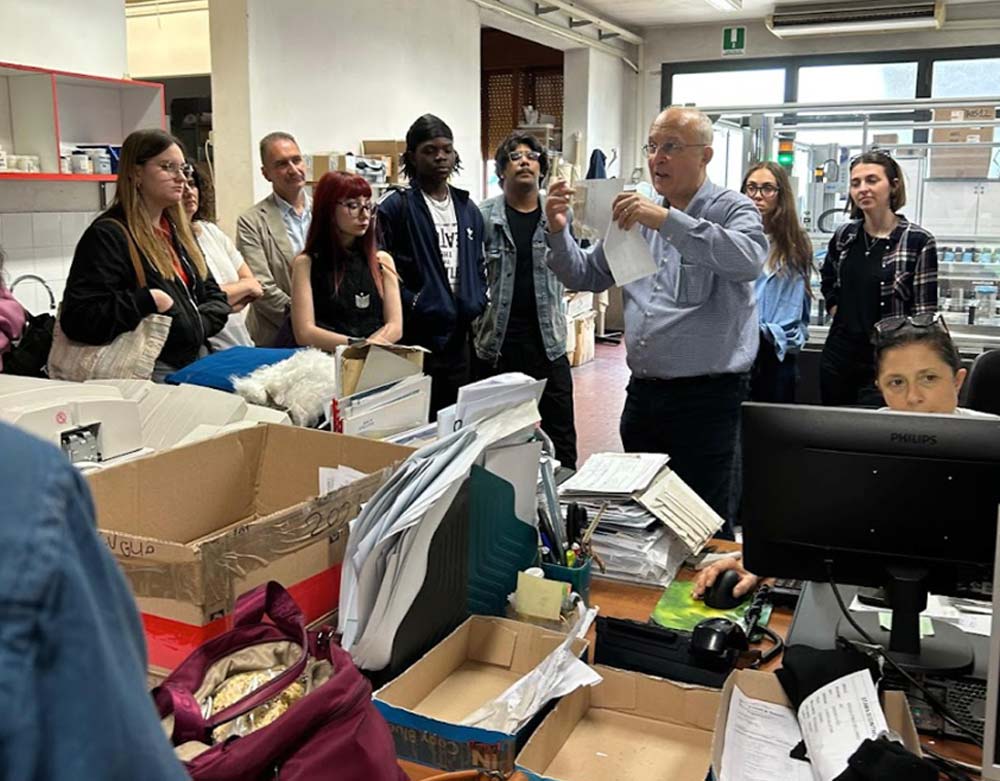
Fashion classes visit sustainable clothing companies and institutions in the CAPRI district
Centro Qualità Tessile (CQT): Laboratory for analysis and quality control of textiles;
Stellatex: Dyeing and finishing of fabrics;
Tessitura Maglieria Marbella: Hosiery manufacturer;
Staff Jersey: Textile manufacturing;
Carpi Fashion System – Carpi business district in collaboration with Democenter (Technological Pole of Modena) Massimo . Garuti
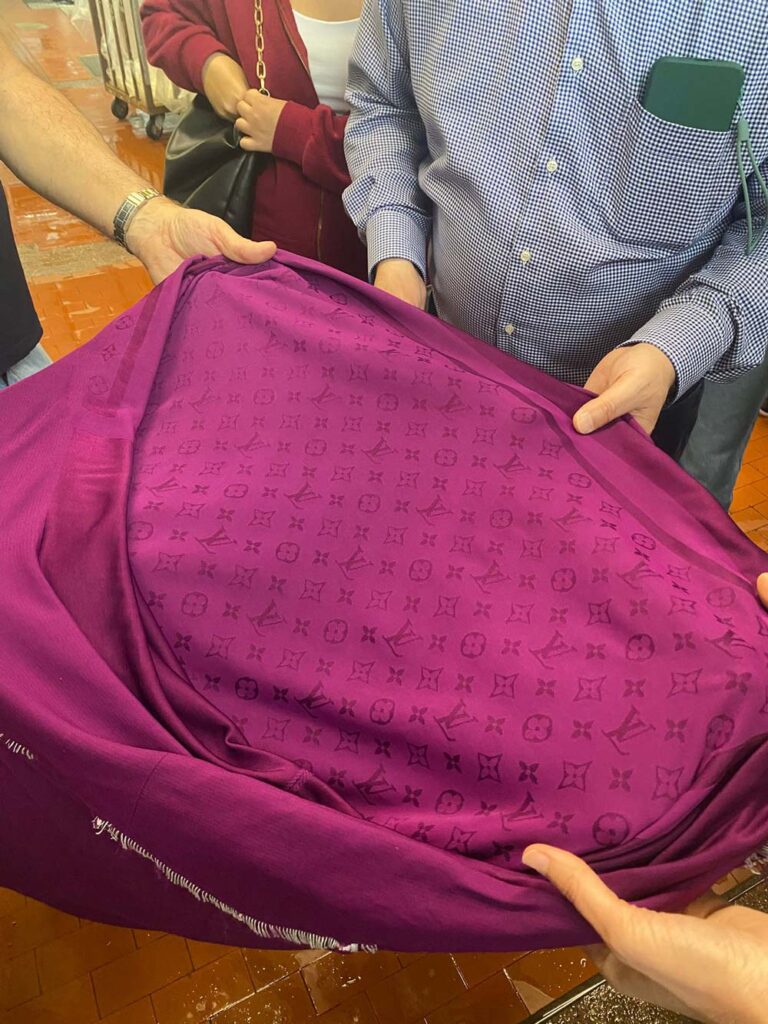
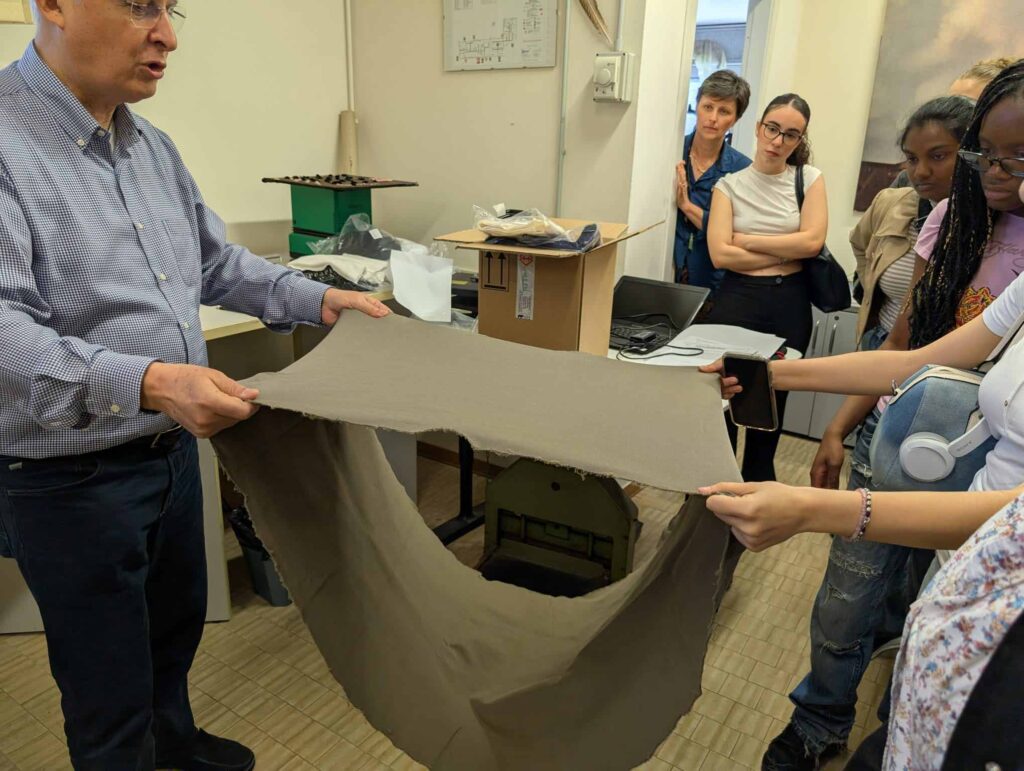
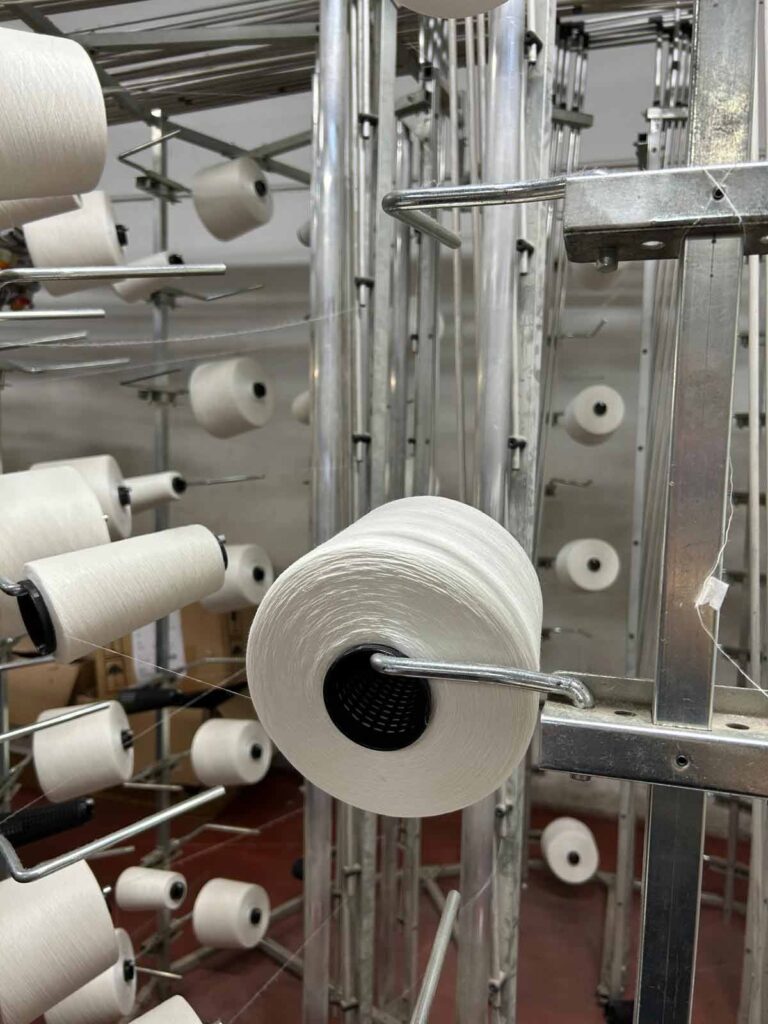
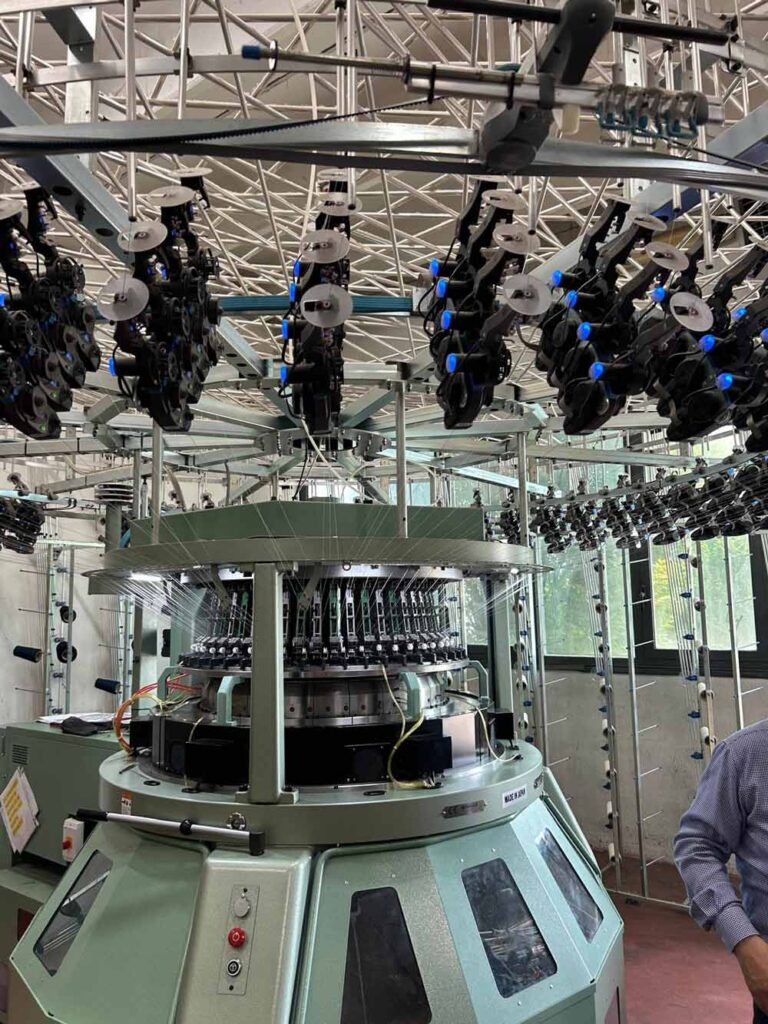
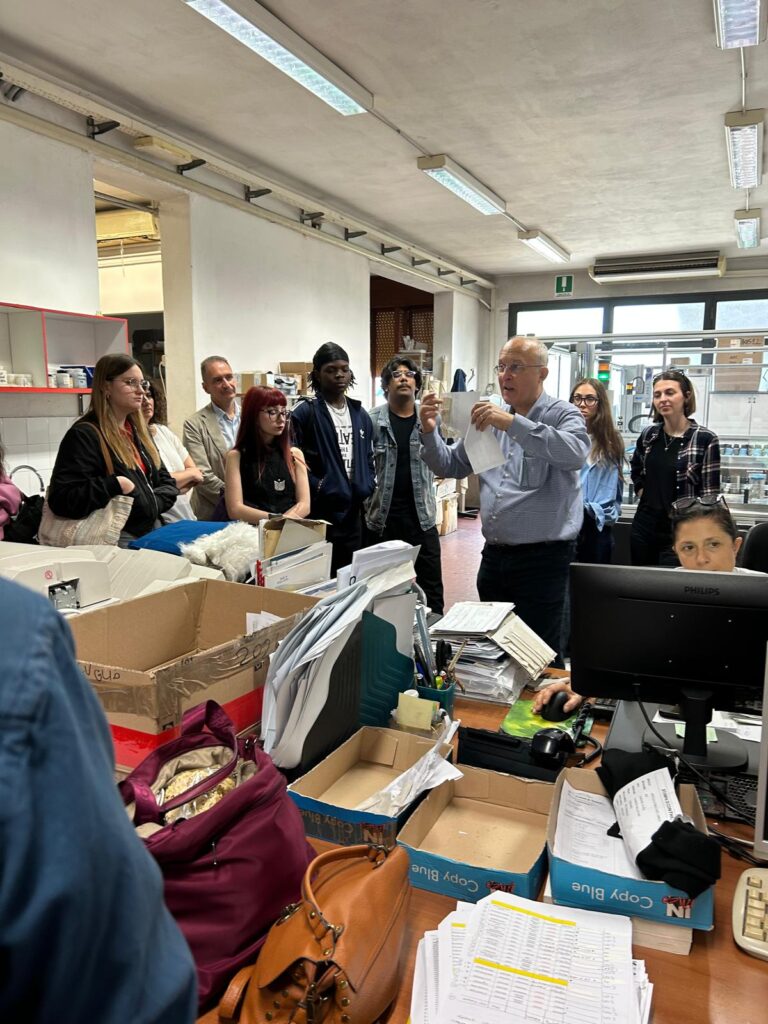
The activity went beyond traditional classroom teaching by providing direct, hands-on contact with real industrial processes. The students visited several companies in the Carpi textile cluster, where they observed machines in operation, explored different stages of production and received detailed explanations from professionals on the manufacturing stages and the organization of the company. This approach allowed students to connect theoretical knowledge from their courses with practical industry experience.
At the end of the visits, students developed their personal reflections by completing VisionART.
The visits enhanced students’ understanding of professional textile environments, promoting awareness of the complexity of production, industry standards and sustainability considerations. They have developed observation skills and practical insights that complement their design training.
The jury evaluates the proposals on five essential criteria:
More than 40 projects were submitted; .
The high quality of the proposals led to the award of special mentions.
The quality of the projects is the direct result of the experimentation with active educational approaches such as PBL (Project-Based Learning), action research and cooperative learning, which made it possible to effectively link academic knowledge to professional requirements.
The competition is the first . of three editions, which makes it possible to build a lasting common vision between the school and the professional world, with a visible impact on the territory.
The composition of the European jury and the presence of the Cooperation Attaché for French (impact on multilingualism and the dissemination of the Italian-French ESABAC course) are major assets.
During the guided tours, students observed the machines in action and received step-by-step explanations from company workers. They analyzed production sequences, noted operational techniques and participated in discussions. Students gained first-hand experience of industrial textile processes and practical knowledge, helping them connect theoretical design concepts to tangible manufacturing practices.
Experience in industrial textile processes
Tangible manufacturing practices
Innovative and sustainable production in the fashion industry.
Students see concretely how sustainability is applied in fashion and they confront professions linked to their orientation. Through completing VisionART in the classroom, students are able to reflect, re-elaborate what they have experienced, and create connections to their own skills and aspirations.
Project visuals
arch. Andrea Rinaldi – President of the Order of Architects of Reggio Emilia – Architect, university professor and researcher in the field of territorial requalification and sustainable architecture.
Understand how contemporary architecture can meet the housing needs of the future, by combining technological innovation, sustainability and the enhancement of existing structures. Develop in students the ability to read the territory and propose simple, flexible and circular housing solutions. The course concerned students in Furniture Design.
The educational course is divided into three parts:
a) Project work guided by Architect Rinaldi. The activity has gone beyond traditional teaching thanks to:
The direct involvement of a local professional (Arch. Andrea Rinaldi) who provided students with real architectural research experience;
The integration between the disciplines of Architecture and Furniture Design, promoting dialogue between technical language and conceptual vision.
A laboratory and reflective method, oriented towards the design of a sustainable and flexible living space.
The use of digital tools for representing and communicating the project, combined with critical analysis of the principles of contemporary housing.
b) Visit to the architecture studio. A real immersion in the design process between the client, materials and working times. The activity took place in the Rinaldi Agency, where the students were able to closely observe the professional working method and the management of project deadlines.
c) Immersion in a university course.
Project Work Experiences
Participation and observation of Professor Rinaldi’s course dedicated to the theme of contemporary housing. Interaction and exchange with university students on current design processes.
Guided analysis of projects and architectural representation methods.
Final discussion on the experience and shared reflection on the importance of university training in the design and architecture sector.
Specifications / Pedagogical Approach (a):
Contemporary architecture and requalification of the territory
Innovation and tradition in the . constructive languages
Sustainability, circular economy, energy efficiency
Architectural composition and housing modularity
Project communication and graphic representation
Explored Content (b):
Participate in interviews with clients and understand communicative and decision-making dynamics . of the design process;
Deep the knowledge of materials used in architecture, with particular attention to their functional and aesthetic application;
Experience learning through experience that goes beyond the traditional school context, integrating technical and relational knowledge.
Explored Content (c):
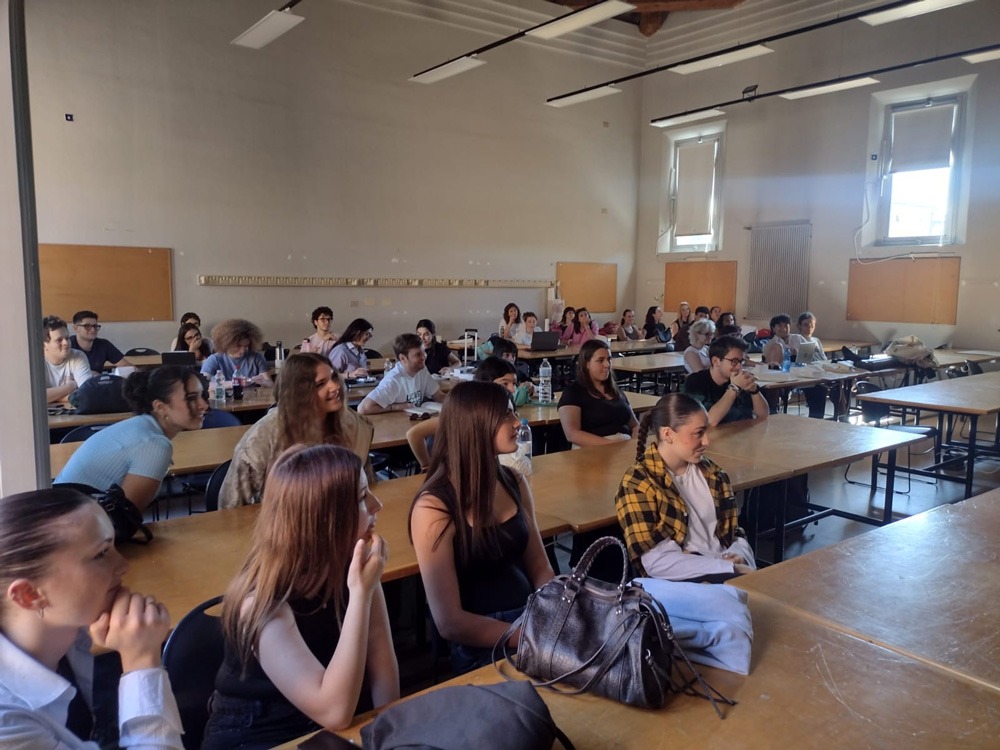
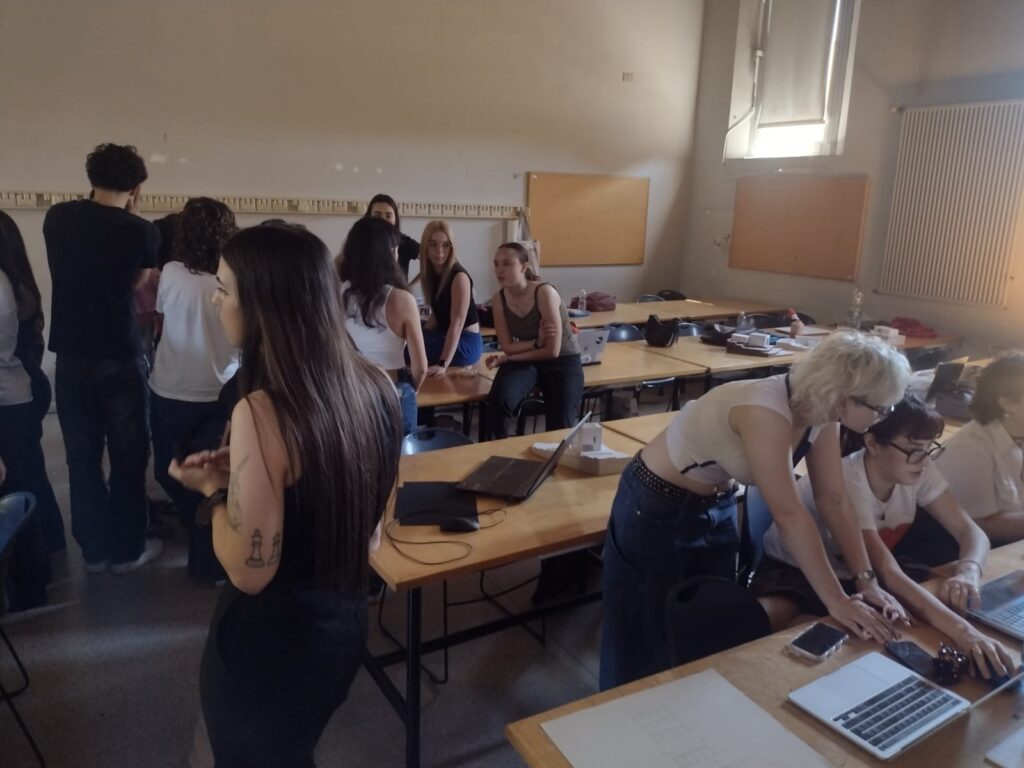
During an Architectural Design course with Professor Andrea . Rinaldi, students were able to witness and participate in the university design process, observing the working methodologies, technical languages and cutting-edge tools used by future architects.
The initiative went beyond traditional teaching through an immersive approach in a real university setting; .
Direct dialogue between high school students and students;
Active immersion in a contemporary architectural design workshop; . an active orientation experience, based on confrontation and conceptual curiosity.
Greater conceptual and environmental awareness;
Understanding the real dynamics of the profession of architect;
The integration between theoretical didactics and professional practice;
The development of an ethical and sustainable conceptual vision, in line with the European values of ARTFORWARD Erasmus.
The course made it possible to:
Project work experiences:
a) Meeting with the architect Andrea Rinaldi in his own agency – presentation of his professional career and the research project on the recovery of the territory through innovative construction techniques. Study day at high school – in-depth study of the concept “Tomorrow: the house of the future”, reflection on the principles of simplicity, flexibility and conceptual sobriety. Conceptual development – development of experimental housing modules inspired by the criteria of efficiency, structural lightness and environmental sustainability.
b) Real immersion in the design process between the client, materials and working times. The visit activity to the Rinaldi agency, where the students were able to: Closely observe the professional working method and the management of project deadlines; . Participate in interviews with clients and understand the exchanges and decision-making that punctuate the creation of an architectural project; . Deepen the knowledge of materials used in architecture, with particular attention to their functional and aesthetic application; . Experiment with an experiential pedagogy that goes beyond the traditional school context, integrating technical and relational knowledge.
c) The high school students noted the differences between secondary and university education, this experience contributed to a greater awareness of their aspirations and their future choices.
The university environment and architectural design workshops
Process and phases of the contemporary architecture project
University working methods and digital representation tools
Dialogue between architecture, design and sustainability
Orientation towards university training and creative professions
Project visuals
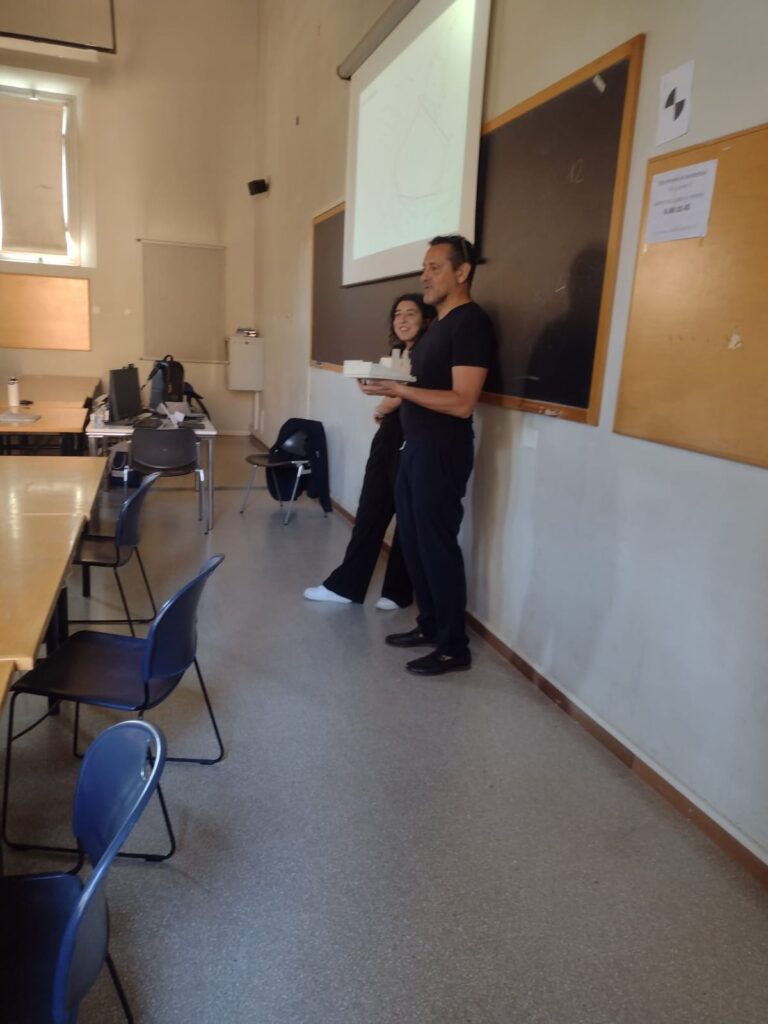
Photos related to the visit of the companies in Carpi
Practical sheet: x
VISIONART:
Using recycled and local materials